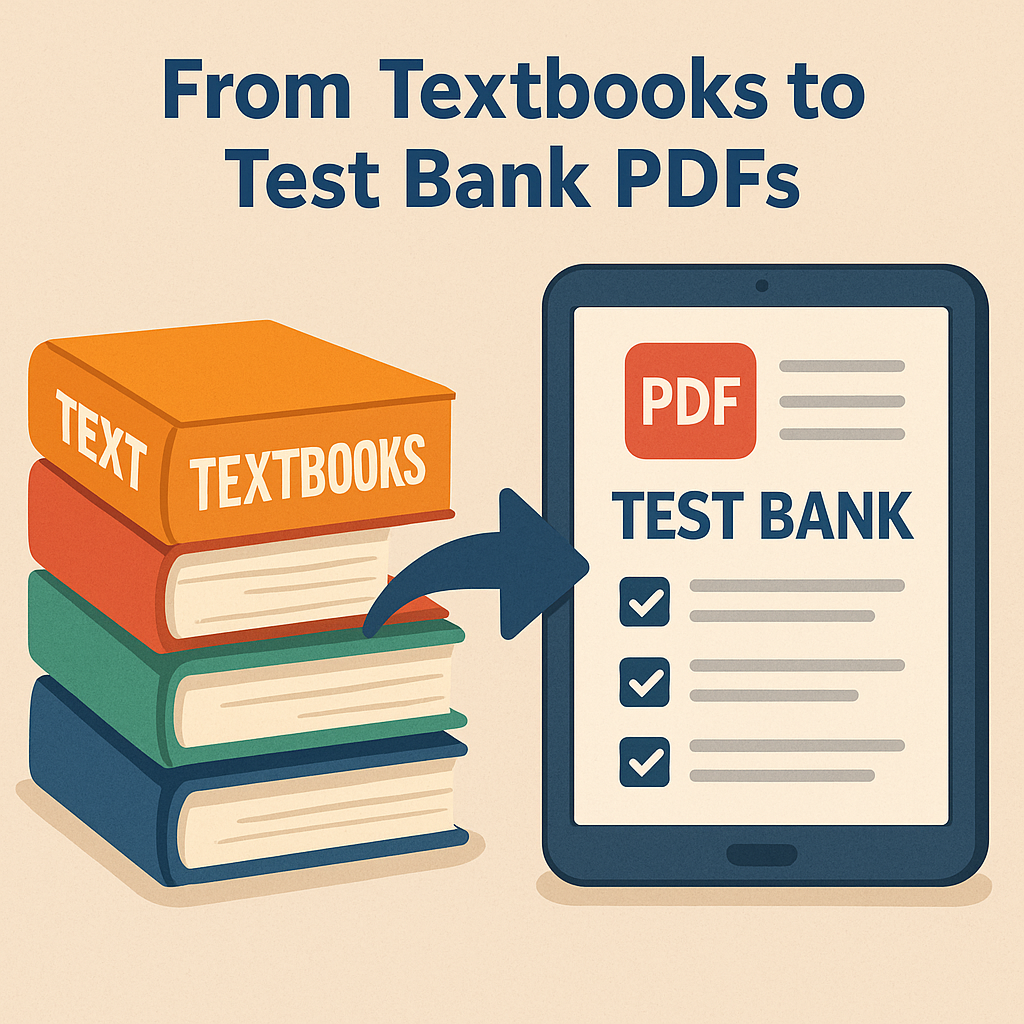
In the dynamic landscape of educational resources, the way students and educators approach learning materials is continuously evolving. Traditional textbooks, once the staple of classroom learning, are increasingly being supplemented or replaced by digital resources. Among these, Testbank PDFs have emerged as a compelling alternative, offering a blend of accessibility, cost-effectiveness, and interactive learning opportunities. This article delves into why Testbank PDFs are gaining traction as the best textbooks for schools and how they are reshaping the educational experience for students and teachers alike.
Exploring the Rise of Testbank PDF Textbooks
The shift towards digital learning tools has been steadily gaining momentum, with Testbank PDFs at the forefront of this transformation. As schools and educational institutions strive for more efficient and engaging ways to deliver content, Testbank PDFs have become an attractive option. These digital textbooks are easily accessible and can be downloaded from platforms like online-testbank.com, providing a wealth of resources at the fingertips of students and educators.
One of the primary drivers of the rise of Testbank PDFs is the increasing integration of technology in classrooms. With the proliferation of tablets, laptops, and smart devices, students are more inclined to use digital formats for their studies. Testbank PDFs cater to this trend by being compatible with various devices, ensuring that students can access their learning materials anytime and anywhere, thus enhancing the learning experience.
Moreover, the economic aspect cannot be overlooked. Testbank PDFs are often more cost-effective compared to traditional textbooks. They eliminate the need for physical production, shipping, and storage, which significantly reduces costs. This affordability makes them an appealing choice for schools operating on tight budgets and for students who might otherwise struggle to afford expensive textbooks.
Finally, the rise of Testbank PDFs can be attributed to the evolving preferences of modern learners. Today’s students are digital natives, accustomed to interactive and multimedia-rich content. Testbank PDFs often incorporate features such as hyperlinks, embedded videos, and interactive quizzes, which align with the learning styles of contemporary students, making them a favored choice over conventional textbooks.
Advantages of Using Testbank PDFs in Schools
The advantages of using Testbank PDFs in educational settings are manifold. First and foremost is the aspect of accessibility. Unlike traditional textbooks that are limited by physical availability, Testbank PDFs can be accessed by multiple users simultaneously, ensuring that all students have equal access to the same learning materials. This democratization of resources is crucial in promoting equitable education.
Another significant advantage is the ease of updating content. In rapidly evolving fields such as science and technology, the ability to quickly revise and update educational materials is invaluable. Testbank PDFs can be updated with the latest information and redistributed efficiently, ensuring that students always have access to the most current knowledge without having to wait for new editions of printed textbooks.
Furthermore, Testbank PDFs offer enhanced interactivity. They often include features such as interactive quizzes and problem sets that provide instant feedback, allowing students to assess their understanding in real-time. This interactive approach not only makes learning more engaging but also helps students retain information more effectively.
Lastly, from an environmental perspective, Testbank PDFs are a sustainable alternative to printed textbooks. By reducing the need for paper production and physical distribution, schools can significantly minimize their carbon footprint. This aligns with the growing emphasis on sustainability in educational practices, making Testbank PDFs an environmentally responsible choice.
Comparing Testbank PDFs to Traditional Textbooks
When comparing Testbank PDFs to traditional textbooks, several key differences emerge. One of the most obvious is the format. Traditional textbooks offer a tactile experience that some students and educators still prefer. However, Testbank PDFs provide a level of portability and convenience that physical books cannot match, as they can be stored and accessed on a single device.
In terms of content delivery, Testbank PDFs have a distinct advantage. They can incorporate multimedia elements such as videos, animations, and interactive diagrams, which can cater to different learning styles and enhance comprehension. Traditional textbooks, while comprehensive, often lack these dynamic elements and rely solely on text and static images to convey information.
Cost is another crucial factor in this comparison. Traditional textbooks can be expensive, not only in terms of initial purchase but also in maintenance and replacement costs over time. Testbank PDFs, on the other hand, offer a more affordable solution, as they do not incur printing or distribution costs. This economic efficiency makes them an attractive option for both schools and students.
Lastly, the ability to personalize and annotate is a feature where Testbank PDFs excel. Students can highlight, take notes, and bookmark sections directly within the PDF, allowing for a personalized learning experience. While some traditional textbooks offer space for notes, they lack the flexibility and ease of use that digital annotation tools provide.
How Testbank PDFs Enhance Student Learning
Testbank PDFs have a profound impact on student learning by offering a range of features that support diverse educational needs. One of the key ways they enhance learning is through adaptability. Students can adjust the text size, search for specific terms, and access additional resources through embedded links, catering to various learning preferences and needs.
These digital textbooks also promote active learning. With features like interactive quizzes and problem-solving exercises, students are encouraged to engage with the material actively rather than passively reading. This engagement helps students to better understand and retain the information, leading to improved academic outcomes.
Additionally, Testbank PDFs facilitate collaborative learning. Many platforms allow for sharing and collaborative annotation, enabling students to work together on assignments or study sessions, even when they are not physically together. This fosters a sense of community and collaboration, which is essential for developing teamwork skills that are valuable in both academic and professional settings.
Finally, Testbank PDFs support self-paced learning. Students can progress through the material at their own speed, spending more time on challenging concepts and quickly moving through areas they find easier. This flexibility allows students to tailor their learning journey to their individual needs and capabilities, fostering a more personalized and effective educational experience.
In conclusion, Testbank PDFs represent a significant advancement in educational resources, offering a modern, efficient, and interactive alternative to traditional textbooks. Their rise in popularity is driven by the increasing integration of technology in education, the demand for more accessible and cost-effective learning materials, and the evolving preferences of digital-native students. By enhancing accessibility, interactivity, and adaptability, Testbank PDFs are not only leveling the playing field for students but also paving the way for a more engaging and personalized learning experience. As educational institutions continue to embrace digital transformation, Testbank PDFs stand out as a forward-thinking solution that aligns with the needs of 21st-century learners.